Free online dog school

Basic obedience

Zwei Hunde werden aneinander vorbeigeführt, während sie mit Leckerli gelockt werden

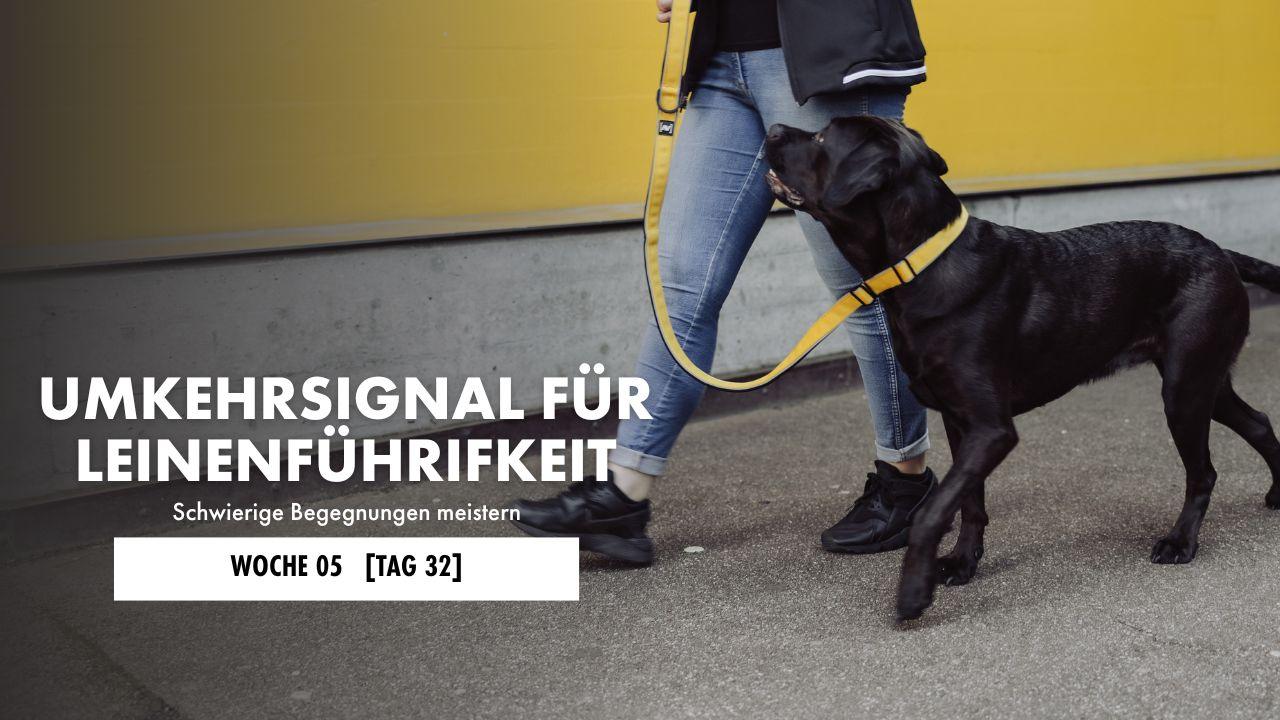
The "Turn Back" Command for Leash Training: How It Helps Your Dog During Difficult Encounters
The reverse signal is an effective technique for mastering dog encounters or other stressful situations in a relaxed manner. By teaching your dog to change direction at your signal, you protect him from unpleasant encounters and at the same time strengthen his ability to walk on the lead. Learn how to build up the reversing signal step by step and use it successfully.

Read moreabout The "Turn Back" Command for Leash Training: How It Helps Your Dog During Difficult Encounters

Zwei Hunde werden aneinander vorbeigeführt, während sie mit Leckerli gelockt werden

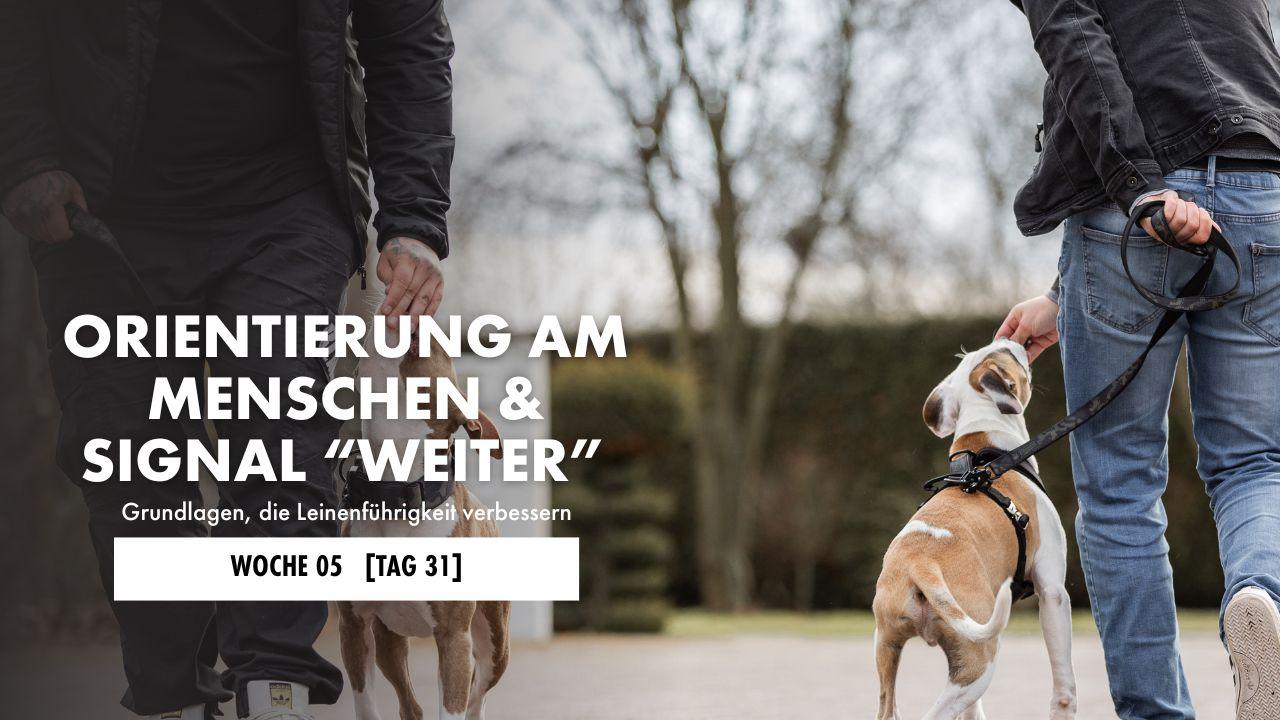
Leash training for dogs: Focusing on the owner & the "Go" command

In week 5 of leash training, you will learn how to improve your dog's orientation towards you through clear rituals and signals. With the "Discoverer" game and the "Next" signal, you will teach your dog to stay with you attentively and interrupt unwanted behaviour. Find out how you can integrate these important rituals into your everyday life.

Read moreabout Leash training for dogs: Focusing on the owner & the "Go" command

Hund liegt auf der Decke

Walking on a Leash: How Routines Help Your Dog Understand Better
Rituals that provide structure are essential for your dog's behaviour on the lead. With clear signals and distinctions between Collar, Harness and Leash, your dog will learn when freedom or discipline is required. These rituals facilitate communication between you and your dog and help him to better understand expectations. Learn how to guide your dog through everyday life with small routines.

Read moreabout Walking on a Leash: How Routines Help Your Dog Understand Better

Hund liegt auf der Decke

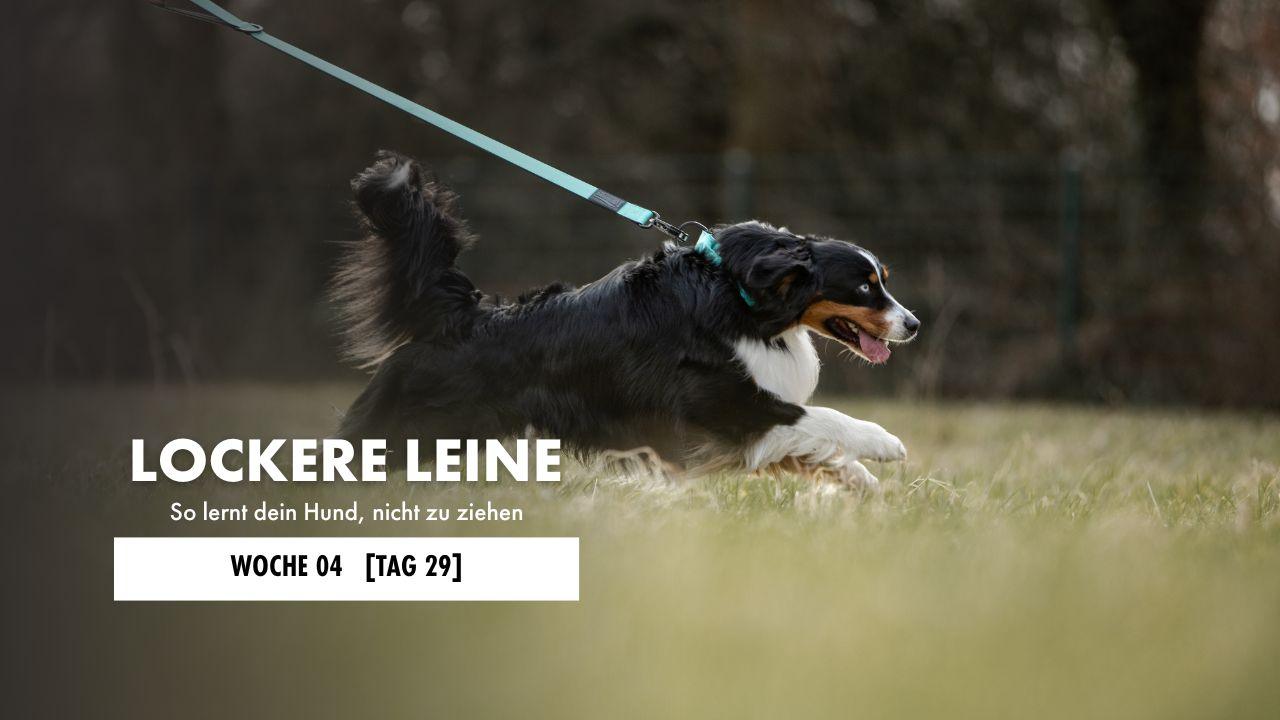
Loose Leash: How to teach your dog to walk calmly on a Leash
The loose Leash is essential training that every dog person should master. Many dogs have learnt that pulling on the Leash gets them to their destination faster, which causes stressful walks in the long run. In this blog, you'll learn how to teach your dog that a loose Leash is the better way through positive reinforcement and proper communication.

Read moreabout Loose Leash: How to teach your dog to walk calmly on a Leash

Hund liegt auf der Decke

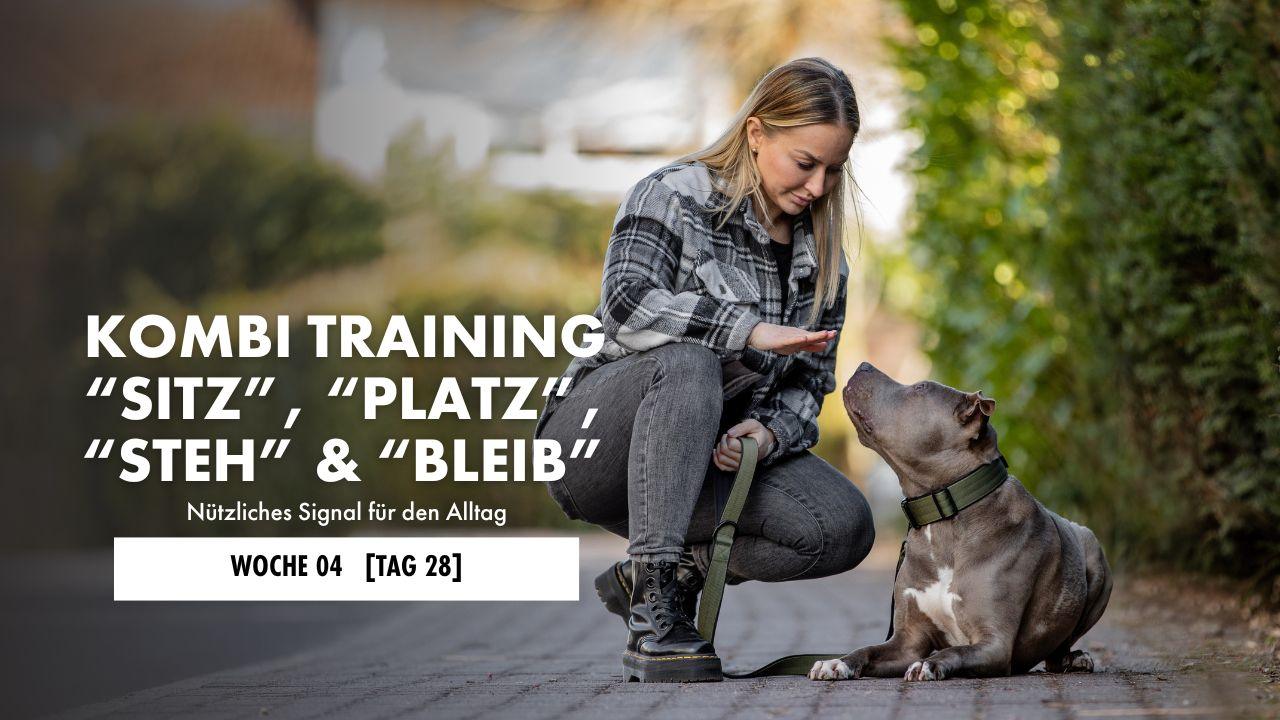
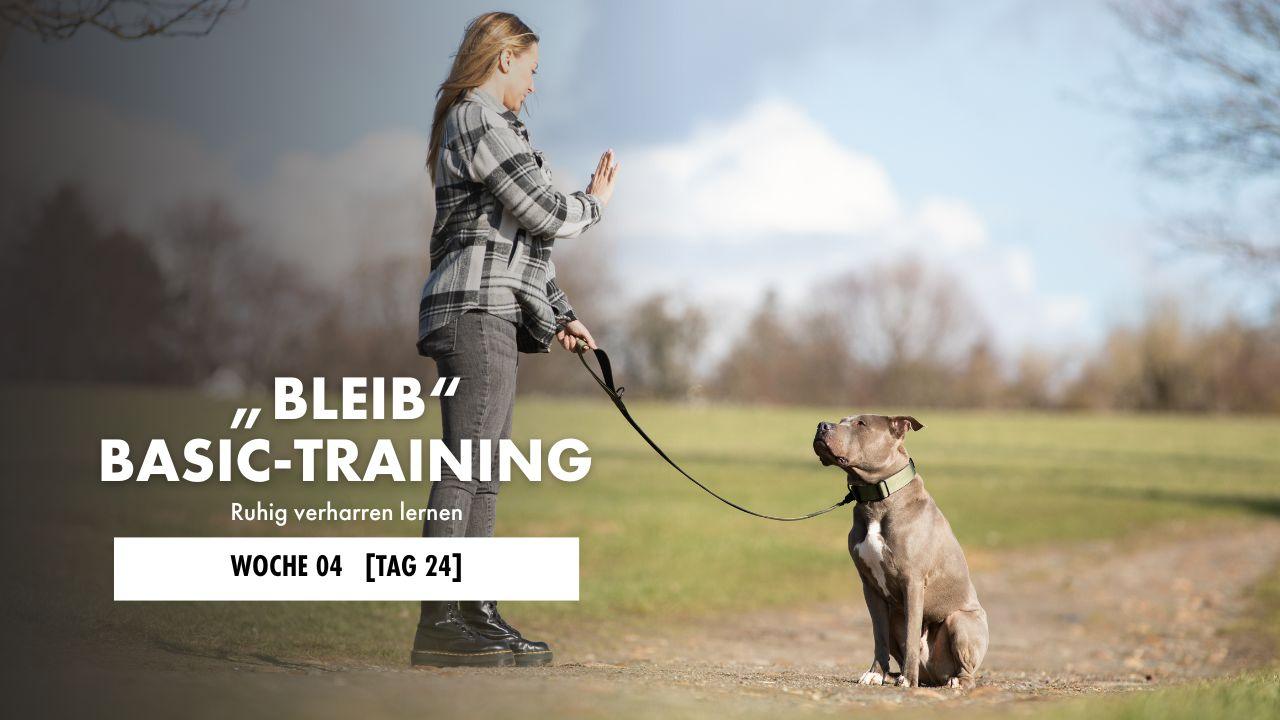
Combined training: "Sit," "Down," "Stand," and "Stay"
The combination training of the signals "sit", "down", "stay" and "stay" challenges your dog both physically and mentally. By varying the signals in a targeted way, you will learn which exercises your dog is good at and which still need work. Short, fun sessions ensure more success and motivation so that your dog stays focussed even in challenging environments.

Read moreabout Combined training: "Sit," "Down," "Stand," and "Stay"

Hund liegt auf der Decke

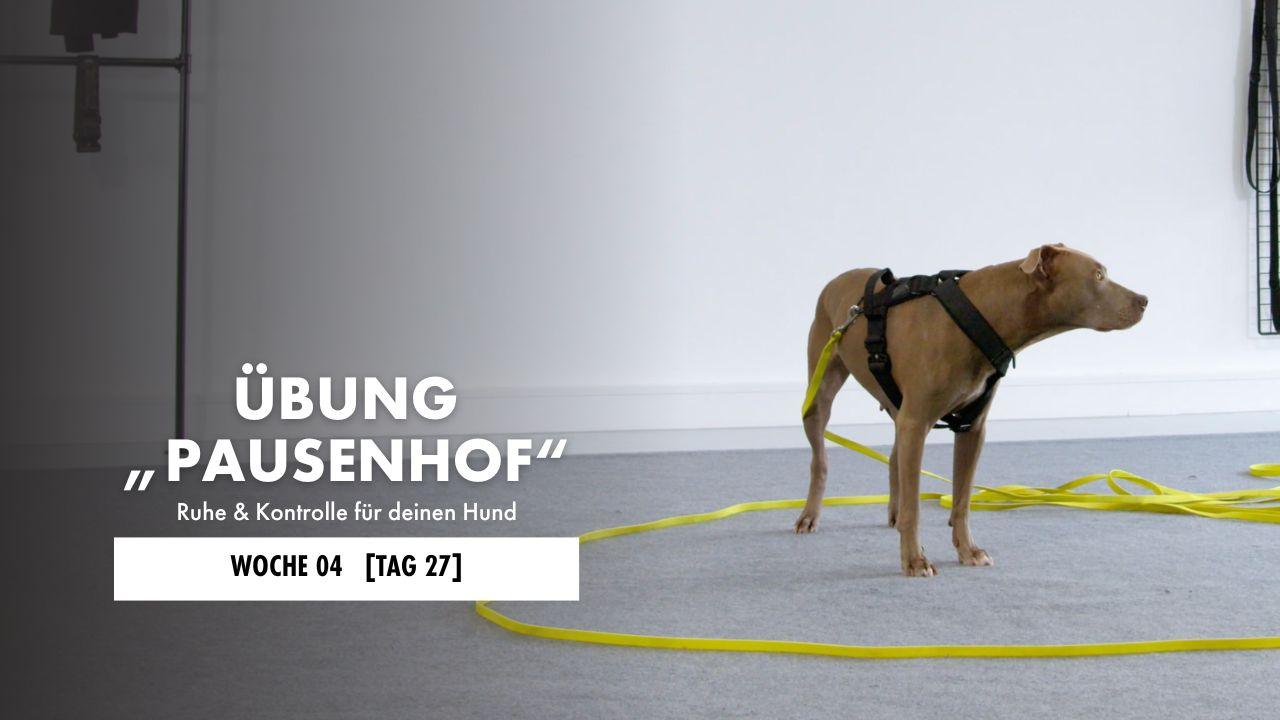
“Playground” – Peace and Control for Your Dog
The "Pausenhof" is a targeted training tool to provide your dog with structure in stimulating environments and to strengthen his impulse control. Your dog learns to stay in a defined area, to perceive its environment and to remain relaxed at the same time. Above all, this exercise helps to increase frustration tolerance and regulate your dog's behaviour in stressful situations.

Read moreabout “Playground” – Peace and Control for Your Dog

Hund liegt auf der Decke

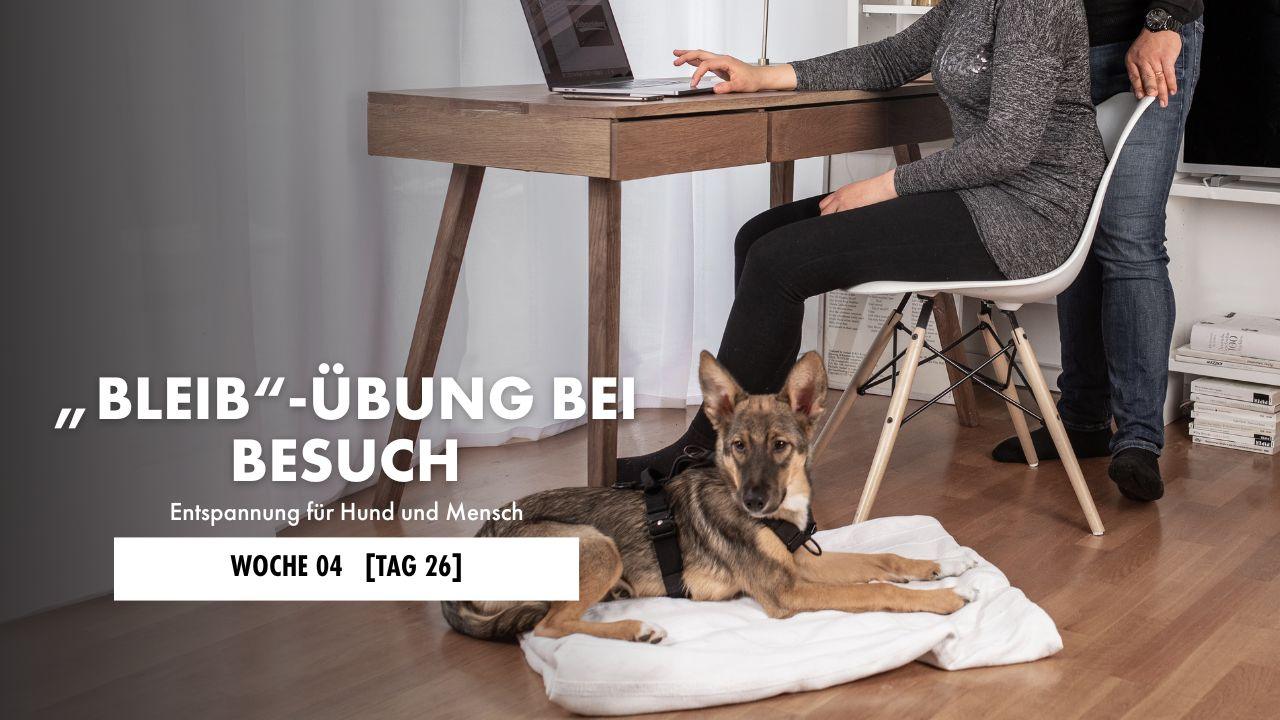
"Stay" Exercise During Visits – Relaxation for Dogs and People
Dogs often react to visitors, whether through territorial behaviour or great joy. With the "stay" exercise, you can teach your dog to stay calm even when the doorbell rings or visitors come into the house. In this blog, we explain how to use the "stay" signal specifically in visitor situations and how your dog learns to respect boundaries without overreacting. This method is ideal for a more relaxed everyday life.

Read moreabout "Stay" Exercise During Visits – Relaxation for Dogs and People

Hund liegt auf der Decke

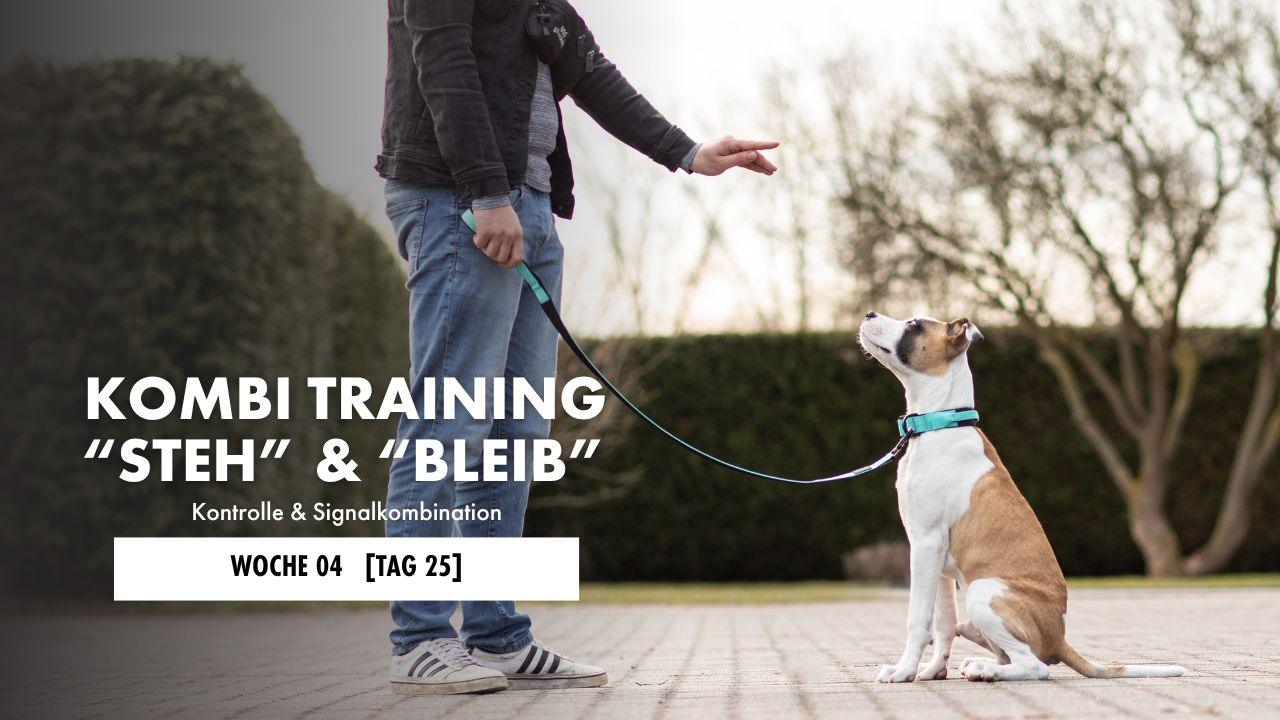
Combined Training: “Sit” & “Stay” – Greater Control Through Signal Combination
The combination of the "stand" and "stay" signals is an effective exercise that helps you to guide your dog safely and in a controlled manner in everyday life. This exercise promotes your dog's signal control, strengthens his impulse control and ensures that he listens to your instructions even in difficult situations. In this blog, you will find out how you can vary the combination training and make it motivating so that you don't miss out on the fun while learning.

Read moreabout Combined Training: “Sit” & “Stay” – Greater Control Through Signal Combination

Hund liegt auf der Decke

“Stay” – Staying Calm Through Targeted Impulse Control

The "stay" signal is an essential exercise to help you control your dog in everyday life and help him stay calm in exciting moments. Whether welcoming visitors or waiting at the front door - the "stay" signal ensures that your dog is aware of the situation without interfering directly. Frustration tolerance and impulse control are particularly important here and are supported by regular training, such as the Protocol for Relaxation.

Read moreabout “Stay” – Staying Calm Through Targeted Impulse Control